
Lithuanian Professionals Latin America (LitPro) & Vilnius Tech Delegation
Inside the Meeting
This is a synthesis, organized by topic, with the content covered during the online meeting held on September 26, 2025. The document brings together the main information, including the questions raised by participants and the answers provided by the university representatives.
Introduction
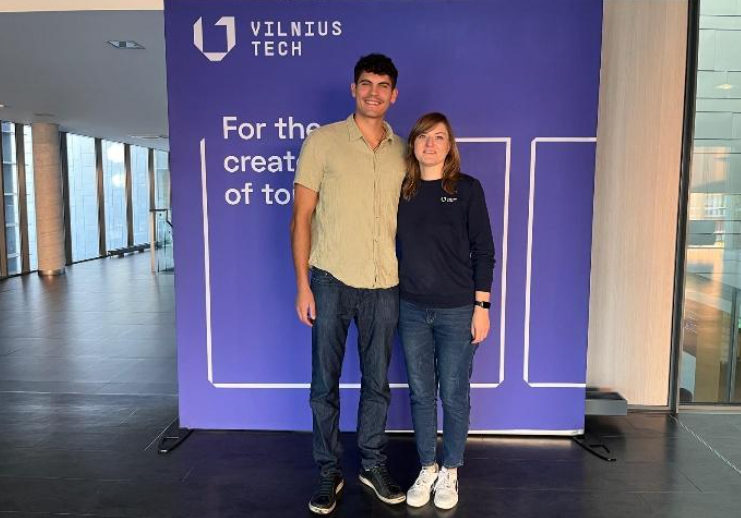
The online meeting was organized by LitPro with representatives from Vilnius Tech (Vilnius Gediminas Technical University: the Director of the International Studies Center, Dovilė Jodenytė, and the Argentine Lithuanian student, Kovas Juan Luksas).
The session was opened by Carlos Levenstein and was moderated by Eduardo Tomasevicius. The purpose was to present the institution, its areas of expertise, study and research opportunities, as well as to clarify participants’ questions (members and guests of LitPro).
The importance of the topic and the closer ties between Lithuanian universities and the diaspora were highlighted, underlining the potential for academic, professional, and cultural collaboration.
The University
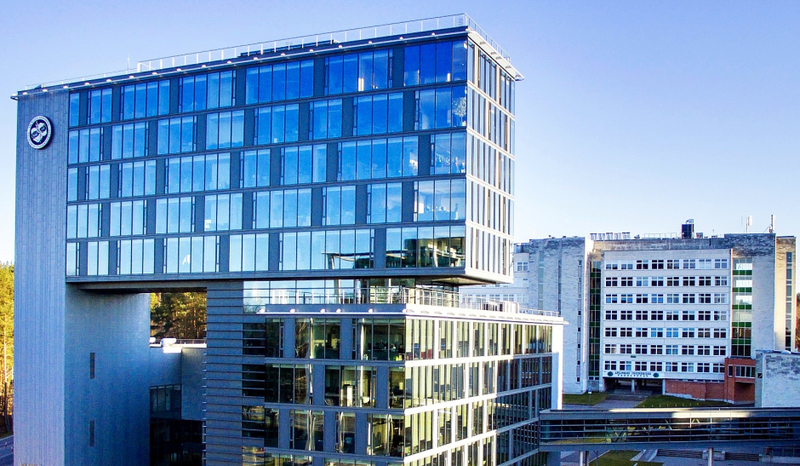
The representatives emphasized the tradition and relevance of Vilnius Tech. The university has 69 years of history and currently gathers about 9,000 students, of whom approximately 24% are international, coming from more than 90 countries. The university maintains over 400 academic partnerships in 60 countries.
It is organized into 11 faculties, covering fields such as engineering, architecture, creative industries, and business. Another highlight is its 43 research centers and specialized laboratories, created to foster joint projects with institutions from different parts of the world.
Academic Programs
The university offers 102 study programs, 78% of them in Engineering, Information, and Technological Sciences. About 60% of these courses are taught in English, broadening access for international students. Among the most sought-after areas are engineering, information technologies, artificial intelligence, sustainability, and business.
Master’s programs last from one to one and a half years, with the final stage dedicated to research projects. Students interested in academic careers also find several doctoral options in 12 fields of study.
The 22 bachelor’s programs taught in English were presented, divided into 3 main areas: Engineering, Technology and IT, and Arts and Social Sciences, as well as 26 master’s programs in the same fields.
Research and Innovation
Vilnius Tech’s priority research areas include mechatronics, robotics, civil engineering with a focus on sustainable materials, communication technologies, artificial intelligence, cybersecurity and digital defense, economic engineering, management, and communication. The representatives stressed their interest in international partnerships for applied research in areas such as smart cities, autonomous vehicles, robotics, renewable energy, fintechs, cybersecurity, bioenergy, and more.
Software Engineering and Cybersecurity
During the meeting, questions arose regarding software engineering and cybersecurity. The university explained that these are priority areas with advanced laboratories. Master’s programs in cybersecurity, for example, are designed for students with a background in software engineering and involve projects focused on digital defense, monitoring, and artificial intelligence applications.
Scholarships and Funding
Tuition fees are approximately €4,000/year for undergraduate programs and between €5,000 and €6,000/year for master’s degrees. Despite this, about 80% of students receive some form of financial support. Scholarships can be applied for through the university’s website or government programs and are available for both undergraduate and graduate studies. The admission process requires a compatible diploma, motivation letter, academic transcripts, and an interview.
Job Market
The representatives explained that Lithuania is currently experiencing growth in the technology sector, with the presence of multinational companies such as Western Union, in addition to Fortune 500 companies. Startups also receive support through incubators and accelerators, with many already achieving international recognition. The official portal Work in Lithuania was mentioned as a reference for job and internship searches.
It was emphasized that more experienced professionals, including those aged 40+, also have opportunities in the job market, especially in technology and innovation fields. Careers can progress quickly thanks to the country’s smaller but highly qualified labor market.
Another government agency introduced was Grįžtu LT, created to support Lithuanians returning to the country. It offers detailed information through its website, email, phone, or live chat box on study and work in Lithuania.
Life in Lithuania
The meeting also provided insights into daily life in the country. Lithuania is considered highly digitalized, with 93% of public services available online and widespread fiber-optic internet coverage, ranking first in Europe. The climate features winters around zero degrees and mild summers.
Another aspect highlighted was the emphasis on work-life balance, with structured work hours and adequate vacation policies. The country is also committed to gender equality, with significant female participation across various fields. About 64% of specialists in STEM (Science, Technology, Engineering, and Mathematics) areas are women—the highest percentage in Europe.
Personal Experiencies
The Vilnius Tech student, originally from Argentina, lived in Brazil and now studies and works in Vilnius. He shared his experience adapting to life in the country. Language and climate were mentioned as challenges, but the widespread use of English in academic and work environments facilitated integration. International experience was described as an opportunity not only for technical development but also for interpersonal skills such as communication, teamwork, and leadership. He noted the abundance of job opportunities and fast professional growth. He adapted easily to the climate, somewhat similar to his home country, and although he misses some foods, motivation outweighs the difficulties.
Internationalization and Latin America
The representatives emphasized Vilnius Tech’s interest in expanding the presence of Latin American students. According to them, Brazilians and Latin Americans have strong backgrounds in mathematics and physics, essential skills for engineering and technology programs. The goal is to prepare professionals who can contribute both to the Lithuanian market and to their home countries.
Student Transfers
It was mentioned that the university accepts student transfers after curriculum compatibility analysis, allowing direct entry into the second year of certain programs.
Closing
The meeting concluded with an invitation to those interested to keep in touch with the university via email or social media. There was also encouragement to participate in study, research, and international cooperation programs. The event ended with thanks to all participants and a group photo as the final record of the session.